Invisalign for Crooked Teeth: What You Need to Know

Crooked teeth are rarely just a cosmetic issue. People usually notice the appearance first, especially in photos or during conversations, but the practical side often matters just as much. Crowded front teeth can be harder to clean. A rotated tooth can catch a toothbrush awkwardly and collect plaque in the spots you miss. A bite that does not line up well can wear certain teeth faster than others. Some patients also develop jaw soreness, speech quirks, or the habit of chewing on one side because the bite never feels quite right.
That is where Invisalign enters the conversation. Clear aligners appeal to adults and teens who want a less visible way to straighten teeth, and in many cases they work very well. At the same time, they are not magic trays that fix every kind of crookedness with equal ease. The best results come when the tooth movement needed matches what aligners do well, and when the patient is consistent enough to wear them as directed.
If you are considering Invisalign for crooked teeth, the useful questions are simple. Can it actually correct your specific problem? How long will treatment take? What will daily life feel like? And what trade-offs come with choosing aligners instead of braces? Those are the questions worth answering before you commit.
What “crooked teeth” really means in orthodontics
Patients often use the phrase crooked teeth to describe several different problems. Sometimes they mean crowding, where there is not enough room in the arch and teeth overlap or twist. Sometimes they mean spacing, where teeth drift apart. In other cases, they are looking at one tooth that sits behind the others, a canine that erupts too high, or a front tooth that flares forward. Bite problems also get folded into the same category, even though they involve how the upper and lower teeth meet, not just how straight the smile looks from the front.
That distinction matters because Invisalign moves teeth through a sequence of controlled plastic aligners. Each aligner makes small programmed shifts. Some movements are very predictable, such as mild tipping, closing small spaces, or relieving mild to moderate crowding. Other movements can be more demanding, such as significant rotations, moving roots bodily through dense bone, correcting a severe deep bite, or treating a substantial jaw discrepancy.
Two patients can both say, “My teeth are crooked,” and still need very different treatment plans. One may be a straightforward aligner case that finishes beautifully in under a year. The other may need extractions, bite correction, rubber bands, or even conventional braces because the tooth movement required is more complex than it appears in a mirror.
How Invisalign actually straightens teeth
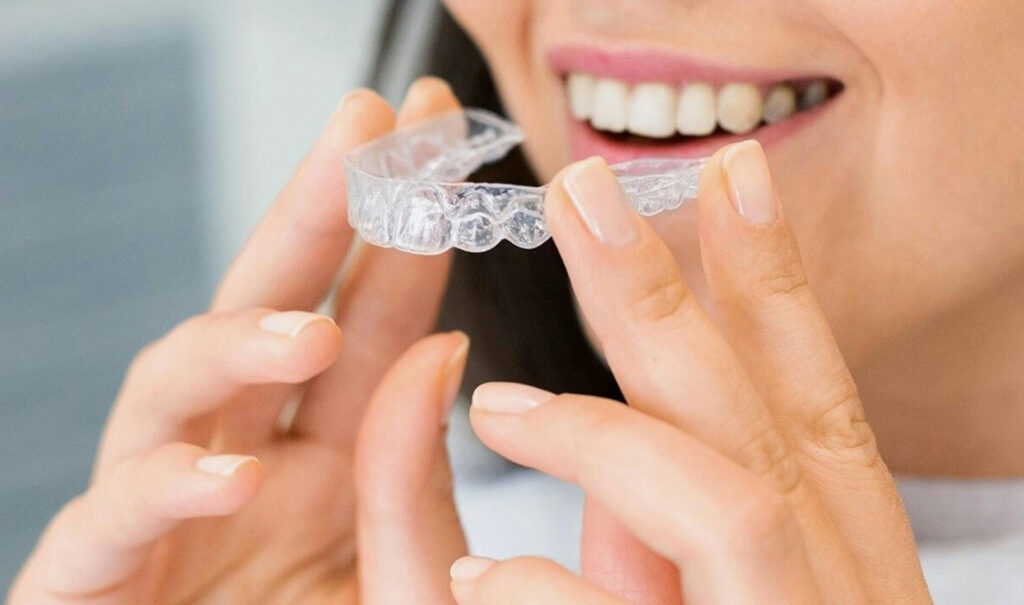
Invisalign uses a digital treatment plan and a series of custom clear trays that https://paxtonafxr419.brightsora.com/posts/how-to-prevent-staining-with-invisalign-aligners fit over the teeth. Each tray is shaped slightly differently from the one before it. When worn enough hours each day, usually around 20 to 22 hours, the aligner applies gentle force to specific teeth. Over time, bone remodels around those teeth, allowing them to move.
Many people are surprised to learn that aligners often rely on small tooth-colored attachments bonded to the enamel. These are little bumps made of composite resin, and they give the trays something to grip. Without attachments, certain movements would be far less effective. Some cases also use elastics, called rubber bands, to help coordinate the bite. So while the appliance looks simple, the mechanics behind it can be sophisticated.
Treatment is usually planned in stages. A patient may receive several sets of aligners at a time and switch them every one to two weeks, depending on the plan. Follow-up appointments track whether the teeth are “tracking” properly, meaning they are moving as predicted by the aligners. If a tooth falls behind, refinement may be needed. That is common enough that experienced orthodontists discuss it early rather than pretending every case runs on rails.
When Invisalign works especially well for crooked teeth
Invisalign tends to shine in cases where the main issue is mild to moderate crowding or spacing. It is also popular for adults who had braces years ago and experienced relapse. That is an everyday scenario in practice. Someone wore braces at 14, skipped retainers in college, and by their early 30s the lower front teeth have begun to overlap again. For that kind of movement, aligners are often an elegant solution.
It can also work well for moderate bite issues, depending on the anatomy and how well the patient follows instructions. Orthodontists now use aligners for far more than simple cosmetic straightening. The technology and planning software have improved significantly, and clinician experience matters a great deal. A highly trained orthodontist can often treat cases with Invisalign that a less experienced provider might decline or mismanage.
Still, there is a meaningful difference between “possible” and “ideal.” A treatment can be technically possible with aligners and still be more efficient, more precise, or more stable with braces. That is why a careful consultation matters.
Cases where Invisalign may not be the best option
There are limits. Severe crowding may require creating space through tooth reshaping, arch development, extractions, or a mix of approaches. Teeth that are heavily rotated, especially rounded teeth like canines or premolars, can be stubborn with aligners. Certain vertical problems, such as a severe open bite or deep bite, may be more challenging. Significant skeletal problems, where the jaws themselves are mismatched, usually need a broader orthodontic or surgical plan.
Compliance is another limit, and it is a bigger one than many people expect. Invisalign only works when it is in your mouth. Braces work around the clock because they are attached to the teeth. Aligners are removable, which is exactly why many people prefer them, but removability cuts both ways. A tray left in its case during long lunches, coffee breaks, and evening social events is not doing its job.
I have seen this pattern repeatedly in adults with demanding work schedules. They start motivated, wear the aligners faithfully for the first month, then the routine slips. A breakfast meeting becomes a tray-free morning. A client dinner stretches for hours. Weekend habits get loose. At the next check, one or two teeth are no longer tracking. The patient thinks the product failed, when the real issue is wear time. That is not a criticism, just a practical reality. Invisalign rewards disciplined patients.
The consultation matters more than the marketing
A polished ad can make clear aligners look universal, fast, and nearly effortless. Real orthodontics is more nuanced. The quality of the diagnosis and treatment plan matters far more than the brand name on the box.
A proper consultation should include a clinical exam, photographs, and usually digital scans or impressions. X-rays are often needed to assess roots, bone levels, impacted teeth, and bite relationships that cannot be judged from the front view alone. If a provider glances at your smile, says “You’re a great candidate,” and moves straight to pricing, that should give you pause.
The more useful conversation covers what is actually causing the crookedness, how much space is available, whether enamel reduction might be needed, whether attachments will be visible, how long treatment is likely to take, and what the fallback plan would be if certain teeth do not track as expected. Those are the kinds of details that separate a sales pitch from clinical judgment.
What treatment feels like day to day
Most patients adjust to Invisalign quickly, but the first week can be an eye-opener. The trays feel tight when a new set goes in, and that pressure is normal. It is not usually sharp pain, more a firm soreness that peaks for a day or two and then settles. Speech may sound slightly different at first, especially with “s” sounds, though many people adapt within days.
The bigger adjustment is behavioral. Every time you eat or drink anything other than water, the aligners come out. Then you brush, or at least rinse well before putting them back in. That means snacking becomes less casual. Some people love that because it cuts down mindless grazing. Others find it tedious by week six.
Appearance is where Invisalign wins many people over. The trays are noticeable up close, but much less obvious than metal brackets. Attachments can still be visible, especially on front teeth, though they are usually subtle. If your work involves frequent presentations, client meetings, or public-facing roles, that lower profile can be a meaningful advantage.
Cost, timeline, and what affects both
The cost of Invisalign varies by region, provider, and case complexity. A limited cosmetic case can cost much less than comprehensive bite correction. In many markets, a full Invisalign treatment plan falls into a similar range as braces, though some offices price one slightly higher than the other. It is worth asking exactly what is included. Retainers, refinement aligners, lost tray replacements, and follow-up visits may or may not be part of the quoted fee.
Treatment time is equally variable. Mild cases may finish in six to nine months. More comprehensive treatment can run 12 to 18 months, and complex corrections may take longer. Patients are sometimes shown an ideal digital animation and assume that is a guaranteed calendar. It is not. Teeth do not always move at identical rates, and refinement is common. A realistic provider frames the timeline as an estimate, not a promise.
A few details tend to shape cost and duration more than patients realize. One is how much bite correction is needed in addition to straightening. Another is whether teeth need to be slenderized slightly between contacts to create room, which is called interproximal reduction. A third is compliance. Treatment that should have taken 10 months can easily drift to 14 if trays are not worn enough.
Invisalign versus braces for crooked teeth
The comparison is less about which is universally better and more about which is better for you. Braces offer unmatched built-in compliance and excellent control, particularly for certain difficult movements. Invisalign offers convenience, appearance, and comfort advantages that many adults value highly.
Here is the practical trade-off. Braces are harder to clean around and more obvious socially, but they stay on and keep working. Invisalign is easier to remove for brushing and eating, but success depends on patient habits. Braces can be especially efficient when movement is complex. Invisalign can feel smoother and less intrusive for everyday life when the case is suitable.
A patient with moderate lower crowding, small upper spacing, and strong self-discipline may be thrilled with Invisalign. A teenager who already loses water bottles and forgets homework may do better with braces. An adult with a highly visible job who is meticulous about routines may consider aligners worth every bit of extra effort. These are judgment calls, not one-size-fits-all rules.
Are you a good candidate?
Most healthy teens and adults with mild to moderate crooked teeth can at least be evaluated for Invisalign, but candidacy depends on more than just how the smile looks from the front.
A strong candidate usually has the following qualities:
- Mild to moderate crowding or spacing, with tooth movements that aligners predictably handle.
- Healthy gums and bone support, or a periodontal condition that is already under control.
- A willingness to wear trays 20 to 22 hours a day, consistently.
- Realistic expectations about refinements, attachments, and treatment time.
- A commitment to wearing retainers after treatment ends.
Gum health deserves special attention. Moving teeth in the presence of untreated periodontal disease is a bad idea. If the gums bleed easily, there is significant recession, or the bone support is reduced, the plan may need coordination with a general dentist or periodontist before orthodontic treatment starts. Straight teeth look better, but healthy supporting tissue matters more.
The hidden part most people underestimate: retention
The day your teeth look straight is not the end of treatment. It is the beginning of maintenance. Teeth have memory, and they tend to drift over time, especially if crowding existed before. Retainers are what hold the result.
This is where many relapse stories begin. A patient completes Invisalign, loves the smile, wears retainers diligently for a few months, then gradually relaxes. A year later the lower incisors start to overlap again. It may be subtle at first, but small shifts become more obvious once they accumulate. If you are investing time and money in straightening crooked teeth, retention is non-negotiable.
Some people use clear removable retainers at night. Others may have a bonded wire behind certain front teeth, sometimes combined with removable retainers. Each option has pros and cons. Bonded retainers help with compliance but require careful cleaning and can break. Removable retainers are simple and discreet but only work if worn.
Common concerns patients bring up
Pain is a common worry. Most people tolerate Invisalign well. There is pressure, especially with new trays, but it is usually manageable and short-lived. Sharp edges can occasionally irritate the gums or tongue, though a provider can often smooth them.
Another concern is whether aligners affect speech. They can at first. Most patients adapt quickly, though those whose work depends on vocal precision, such as broadcasters, trial attorneys, or performers, often notice the adjustment more.
People also ask whether they can drink coffee with the trays in. The safe answer is water only. Hot drinks can warp plastic, and dark drinks stain it. Some patients bend this rule with iced clear beverages, but that is one of those habits that tends to catch up with treatment quality and tray hygiene.
A final concern is whether Invisalign is purely cosmetic. It is not. While many people seek it for appearance, properly planned treatment can improve function, cleaning access, and wear patterns. The caveat is that not every cosmetic alignment issue reflects a simple functional fix, and not every functional bite issue can be solved with cosmetic-looking aligners alone. Good treatment planning bridges both.
Questions worth asking before you start
A consultation is more useful when you know what to ask. These five questions usually lead to a better decision:
- Is Invisalign the best option for my case, or simply one possible option?
- What movements in my case are straightforward, and which ones are less predictable?
- How many months do you estimate, and how often do patients like me need refinements?
- Will I need attachments, interproximal reduction, or elastics?
- What retainer plan do you recommend once treatment is complete?
The wording matters because it invites candor. A provider who explains the hard parts of your case usually inspires more confidence than one who claims everything will be quick and easy. Orthodontics is still biology. Teeth move well, but not always perfectly on schedule.
Choosing the right provider
If you are serious about Invisalign for crooked teeth, the provider you choose can make as much difference as the aligner system itself. Orthodontists receive additional specialty training in tooth movement and bite correction beyond dental school. Many general dentists also provide aligner treatment and do it responsibly, especially for limited cases, but the level of case complexity they handle varies widely.
Rather than focusing only on price or convenience, look at experience with cases like yours. Ask to see before-and-after results for crowding patterns or bite issues similar to your own. Pay attention to whether the treatment plan sounds customized or generic. If one provider says your case is simple and another says it requires careful staging, ask why. The explanation often reveals who is really evaluating the mechanics and who is mostly quoting a product.
It can also be wise to get a second opinion if the case is anything beyond mild cosmetic straightening. That is not a sign of distrust. It is a reasonable step before making a decision that affects your bite, oral health, and budget.
What a realistic outcome looks like
The best Invisalign result is not a computer-perfect smile that exists only in simulation. It is a healthy, functional, attractive alignment that suits your face, your bite, and the biology of your teeth. Sometimes that means every little overlap is corrected exactly as hoped. Sometimes it means the smile looks dramatically better and the bite functions better, but one tiny rotation ends up less than textbook perfect. Experienced clinicians talk honestly about that range because perfection is a poor substitute for predictability and health.
For many adults with crooked teeth, Invisalign is an excellent choice. It can straighten teeth discreetly, fit into a professional lifestyle, and produce results that are both noticeable and satisfying. But it works best when the diagnosis is thoughtful, the case is well suited to aligners, and the patient is willing to meet the system halfway every single day.
If you remember only one thing, let it be this: Invisalign is not just a product you buy. It is a treatment process you participate in. When the case selection is right and the follow-through is strong, it can do remarkable work on crooked teeth. When either of those pieces is missing, the clear trays alone will not save the plan.
Omni Dental Specialty
Address: 1690 E Gonzales Rd, Oxnard, CA 93036
Phone number: +18053666000
FAQ About Invisalign
How much does Invisalign actually cost?
The out-of-pocket cost for Invisalign typically ranges between $3,000 and $8,000, with most patients paying a national average of roughly $5,100 to $5,700 before insurance.
What is the downside to Invisalign?
The biggest downsides to Invisalign are the intense discipline required to wear the trays 22 hours a day, the inconvenience of removing them to eat or drink, and the inability to fix severe, complex orthodontic issues.
Is $5000 a lot for Invisalign?
No, $5,000 is not considered a lot for Invisalign; it is exactly the national average. Treatment costs typically fall between $3,000 and $8,000, and $5,000 is the standard fee for a moderately complex case that takes 6 to 18 months to complete.