How Invisalign Compares to Traditional Metal Braces

Choosing between Invisalign and traditional metal braces rarely comes down to a single factor. Most patients walk into that decision thinking about appearance first, then quickly realize they also need to weigh comfort, discipline, cost, treatment complexity, and plain day-to-day practicality. What looks simple from the waiting room chair often turns out to be a set of trade-offs.
That is especially true for adults and teens who already have full schedules. A person who spends all day in meetings may care deeply about how appliances look when speaking. A high school athlete may worry more about mouth injuries during practice. A parent comparing options for a teenager may focus on treatment reliability, especially if that teenager loses water bottles, hoodies, and anything not physically attached to them. The right answer is not always the same, even when two patients have similar crowding.
Invisalign has become the most recognizable name in clear aligner treatment, and for good reason. It offers a discreet way to move teeth and can be remarkably effective in the right case. Traditional metal braces, on the other hand, remain one of the most dependable tools in orthodontics. They are visible, yes, but visibility is only one part of the picture. When the bite is complicated, when teeth need significant movement, or when patient compliance is uncertain, braces often retain an edge.
The basic difference is simpler than the decision
Traditional metal braces use brackets bonded to the teeth and connected by wires. The orthodontist adjusts those wires over time to guide the teeth into better positions. The system is fixed, which means the patient cannot remove it at home. That fixed nature is one of its greatest strengths.
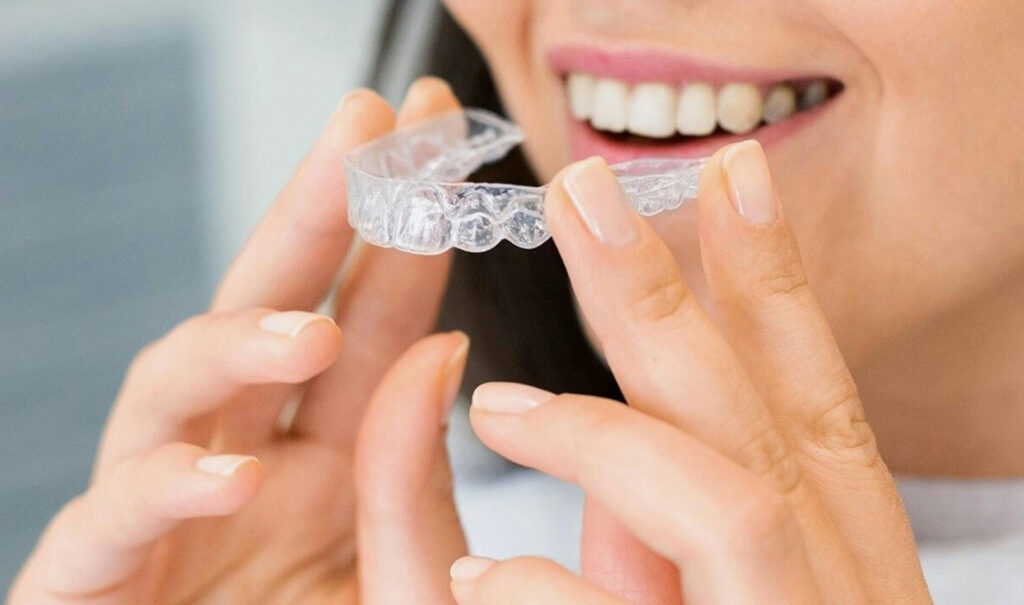
Invisalign uses a series of custom-made clear plastic trays, also called aligners. Each set is designed to make small, planned movements. The patient wears the trays for most of the day, usually around 20 to 22 hours, and changes to the next set according to the orthodontist’s instructions. Attachments, which are small tooth-colored bumps bonded to certain teeth, are often used to help the aligners grip and move teeth more precisely.
From a distance, that can make Invisalign sound like braces without the metal. In practice, the experience is different in several important ways.
Appearance matters, and it matters more than some people admit
For many adults, appearance is the tipping point. They may have wanted straighter teeth for years but delayed treatment because they could not imagine walking into work with a full set of metal braces. Invisalign solves that problem for a large group of patients. The trays are noticeable up close, especially when attachments are present, but they are still far less obvious than brackets and wires.
That discretion can change behavior. People smile more readily when they do not feel self-conscious about their treatment. They speak with less hesitation. They are often more willing to begin care in the first place.
Metal braces have become more socially accepted over time, and younger patients usually adapt quickly. Many teens stop caring about the look after the first week or two. Adults can adapt too, but there is no way around the fact that metal braces are visible. For some patients, that visibility is not a problem at all. For others, especially people in client-facing roles, it feels significant every single day.
Still, appearance alone should not drive the choice. I have seen patients start out convinced they wanted Invisalign at any cost, then learn that their bite issues would be treated more predictably with braces. Once they understood the reason, many were relieved to choose the option that gave the orthodontist stronger control.
Comfort is not a one-sided contest
People often assume Invisalign is always more comfortable. In many cases, it is. There are no brackets rubbing against the inside of the lips and cheeks, and no wire ends poking unexpectedly after a shift in tooth movement. That makes a real difference, especially in the early months.
But Invisalign is not pain-free. Each new tray can create pressure for a day or two, and some aligner edges can feel sharp until the mouth adjusts. Attachments can also create friction where the cheeks or lips meet the teeth. https://reidvckj041.tearosediner.net/invisalign-checkups-how-often-will-you-visit-the-dentist Patients who clench or grind sometimes report that the trays make them more aware of that habit.
Metal braces can cause more irritation to soft tissue, particularly after placement and wire changes. Orthodontic wax helps, and most patients toughen up fairly quickly, but the first stretch can be rough. Certain foods can bend a wire or loosen a bracket, which may create sudden discomfort and lead to an extra appointment.
The more honest comparison is this: Invisalign tends to be gentler on cheeks and lips, while braces tend to be more physically intrusive. Both can make teeth sore during active movement. Neither option feels completely natural at first.
The biggest hidden factor is compliance
This is where Invisalign can shine or fail, and the difference often has little to do with the aligners themselves.
Braces work around the clock because they stay on. A patient can forget about them, dislike them, complain about them, and still continue treatment every minute of the day. That consistency is hard to beat. It is one reason orthodontists still favor braces in many cases involving younger teens, complicated tooth movement, or patients who are unlikely to follow a strict routine.
Invisalign only works as designed if it is worn as prescribed. Taking trays out for meals is convenient. Taking them out for coffee, then leaving them out through a long meeting, then forgetting to put them back in for the drive home, is not. Those little gaps add up. A patient who averages 14 to 16 hours a day instead of 20 to 22 may see slower progress, poor tracking, or a need for mid-course corrections.
This is where personalities matter. Highly organized adults often do very well with Invisalign. They keep the case with them, clean the trays consistently, and build wear time into their routine. Some teens do great with it too, especially if they are motivated and supported. Others struggle, not because they are careless in a moral sense, but because removable treatment asks for a level of self-management they are not ready to maintain.
If you know you are the sort of person who misplaces sunglasses, skips retainers, or snacks all day, that matters. The most elegant treatment plan in the world does not help if it spends half the day in a napkin at lunch.
Which option handles complex cases better?
Orthodontics has moved a long way, and Invisalign can now treat much more than simple cosmetic alignment. Mild to moderate crowding, spacing, and many bite issues can be managed very effectively with clear aligners. Some extraction cases and more involved movements can also be treated successfully in experienced hands.
Even so, traditional braces still hold an advantage in certain complex situations. Severe rotations, major vertical changes, substantial bite discrepancies, impacted teeth, and cases requiring especially fine root control often respond more predictably to fixed appliances. That does not mean Invisalign cannot be used, but it may require more refinements, more attachments, elastics, or a longer timeline.
This is one point patients sometimes misunderstand. They hear that Invisalign can treat a broad range of cases and assume treatment is equivalent in every situation. Equivalent is not always the right word. Possible, yes. Advisable, sometimes. Most efficient or most controlled, not always.
An experienced orthodontist will usually frame the conversation around predictability. If both options can work, the next question is how efficiently they are likely to work, how much cooperation is required, and how likely it is that the final bite will be as stable and precise as hoped.
Daily life feels very different with each one
Braces change the way you eat. Hard bread crusts, sticky candy, popcorn kernels, whole apples, and chewy snacks become risky or irritating. Patients learn quickly to cut food into smaller pieces and chew more carefully. Restaurant choices may change for a while. So do habits like absentmindedly biting pens or opening packages with the front teeth.
Invisalign gives patients more food freedom because the trays come out during meals. That is one of its strongest lifestyle advantages. If you want corn on the cob, steak, nuts, or gum, the aligners are not the barrier. The catch is that every meal or snack creates a decision point. Trays need to come out, teeth should be brushed before reinsertion when possible, and wear time still has to stay high. Frequent grazers often find this more inconvenient than they expected.
Speech can also differ. Metal braces may alter pronunciation briefly, but many patients adjust within days. Invisalign can produce a slight lisp at first because the trays add thickness over the teeth. Most people adapt quickly, though some continue to notice it with certain sounds, especially early in treatment or after switching to a new tray.
For musicians who play wind instruments, athletes who wear mouthguards, and professionals who speak for a living, these details can matter more than the general marketing language suggests. A trial adjustment period is common either way, but the type of adjustment is different.
Oral hygiene is easier with one, but that is only half the story
On paper, Invisalign has the advantage here. Because the trays are removable, patients can brush and floss normally. There are no wires to thread around, no brackets collecting food, and no special floss threaders required. For patients with excellent habits, this can be a major benefit.
Braces make oral hygiene more demanding. Plaque builds more easily around brackets and along the gumline. Cleaning takes longer and requires more attention. Patients who rush or skip brushing can end up with inflamed gums, decalcification marks, or cavities around the brackets. That risk is real and often underestimated at the start.
Yet removable appliances create their own hygiene burden. Aligners need regular cleaning, and they trap saliva and whatever residue remains on the teeth. Putting trays back in after a sweetened drink or snack without brushing is not ideal. Patients who do that repeatedly can still run into problems.
So yes, Invisalign makes brushing and flossing mechanically easier. But successful hygiene still depends on habits. Better tools do not automatically produce better care.
Cost is close enough that other factors often matter more
Fees vary by region, provider experience, and case complexity, so sweeping numbers are not especially useful. In many practices, Invisalign and metal braces fall into a similar general range, with Invisalign sometimes costing somewhat more. In other offices, the difference is minimal. The complexity of the treatment can matter more than the appliance itself.
What patients should ask is not just, “Which one is cheaper?” but “What is included?” Refinement aligners, replacement trays, emergency visits, retainers, and follow-up care can affect the real cost. Financing terms can also influence what feels manageable.
There is a practical point here that families appreciate once treatment begins. Braces may come with occasional repairs if a bracket breaks or a wire loosens. Invisalign can come with replacement costs if trays are lost or damaged. Neither system is completely free of surprise inconvenience.
Treatment time depends on the case and the patient
People want a clean answer on how long Invisalign takes compared with braces, but treatment length depends heavily on the diagnosis and on compliance. Mild cases may finish in well under two years with either approach. More involved cases can take longer regardless of appliance choice.
Braces can be faster in cases where the orthodontist needs continuous control without depending on patient wear. Invisalign can be very efficient when the case is well suited to aligners and the patient wears them faithfully. When compliance drops, treatment can stall. That lost time is one of the most common frustrations with removable systems.
It is also worth noting that Invisalign treatment plans often include refinements. These are additional aligners made after reassessment to fine-tune the result. Refinements are common and not necessarily a sign that anything went wrong. Teeth do not always move exactly like software predicts. Patients should know that from the start, rather than assume the first set of trays guarantees a finished result on the original timeline.
The office experience can feel different too
Adjustment visits for braces often involve wire changes, elastic instructions, and checks for broken hardware. Some appointments are quick, others less comfortable. There is a tactile, mechanical aspect to braces that patients either tolerate well or dislike intensely.
Invisalign visits can feel simpler. The orthodontist checks fit, progress, attachments, and bite, then issues the next sets of aligners or updates the plan. There may be fewer emergency visits because there are no poking wires or loose brackets. That said, poor tray fit, lost aligners, or tracking issues can create their own interruptions.
Remote monitoring has become more common with clear aligners, and some patients appreciate the flexibility. It can work well for straightforward progress checks, but it should not replace thoughtful in-person evaluation when the case requires hands-on judgment.
Some patients are better candidates for one option than the other
There is no perfect dividing line, but patterns do emerge in practice.
Patients who often prefer Invisalign include image-conscious adults, professionals who speak publicly, people with mild to moderate alignment issues, and disciplined patients who are comfortable following a routine. It also appeals to those who want to remove their appliance for meals and oral hygiene.
Patients who often do better with braces include younger teens with uncertain compliance, people with more complex bite or tooth movement needs, and anyone who wants a system that does its job without needing daily self-enforcement. Braces can also be a better fit for patients who snack frequently and do not want to constantly remove and replace aligners.
That said, exceptions are common. I have seen meticulous teenagers outperform distracted adults with Invisalign, and adults with demanding cases do beautifully in braces because they value efficiency over discretion. Assumptions based on age alone can be misleading.
Questions worth asking before you decide
The most useful consultation is not the one where you ask which option is more popular. It is the one where you ask how each option would perform in your specific case. A few questions tend to reveal the difference quickly:
- Am I a good candidate for Invisalign, or just a possible one?
- If both options can work, which is more predictable for my bite?
- How much will my own compliance affect the timeline?
- Will my case likely need refinements or elastics?
- What costs and retainers are included in the quoted fee?
A careful orthodontist should be able to explain not just whether Invisalign can work, but where its limits are in your situation. That conversation is far more valuable than any blanket claim online.
The choice often comes down to what kind of burden you would rather carry
Both Invisalign and metal braces ask something of the patient. Braces ask you to tolerate visibility, food restrictions, and more difficult cleaning. Invisalign asks you to be disciplined, consistent, and willing to plan around removal and wear time.
Some people would much rather deal with a fixed appliance than think about their aligners every time they have coffee. Others would gladly manage the routine if it means avoiding metal brackets in photos and meetings. Neither preference is superficial. Treatment only works well when it fits real life.
What matters most is not which option sounds more modern or more familiar. It is which one gives you the best balance of effectiveness, predictability, and day-to-day livability for your actual teeth, your actual schedule, and your actual habits.
For straightforward cosmetic cases, Invisalign can be an excellent solution, discreet, flexible, and highly appealing for adults who will wear it properly. For complex movement, less reliable compliance, or patients who want maximum built-in consistency, traditional metal braces remain an extraordinarily effective choice. Orthodontics is full of nuance, and the best decisions usually come from respecting that nuance rather than looking for a universal winner.
A good result is not about choosing the trendier appliance. It is about choosing the tool that matches the case and the patient. When those two line up, both systems can deliver excellent smiles and healthy, functional bites.
Omni Dental Specialty
Address: 1690 E Gonzales Rd, Oxnard, CA 93036
Phone number: +18053666000
FAQ About Invisalign
How much does Invisalign actually cost?
The out-of-pocket cost for Invisalign typically ranges between $3,000 and $8,000, with most patients paying a national average of roughly $5,100 to $5,700 before insurance.
What is the downside to Invisalign?
The biggest downsides to Invisalign are the intense discipline required to wear the trays 22 hours a day, the inconvenience of removing them to eat or drink, and the inability to fix severe, complex orthodontic issues.
Is $5000 a lot for Invisalign?
No, $5,000 is not considered a lot for Invisalign; it is exactly the national average. Treatment costs typically fall between $3,000 and $8,000, and $5,000 is the standard fee for a moderately complex case that takes 6 to 18 months to complete.